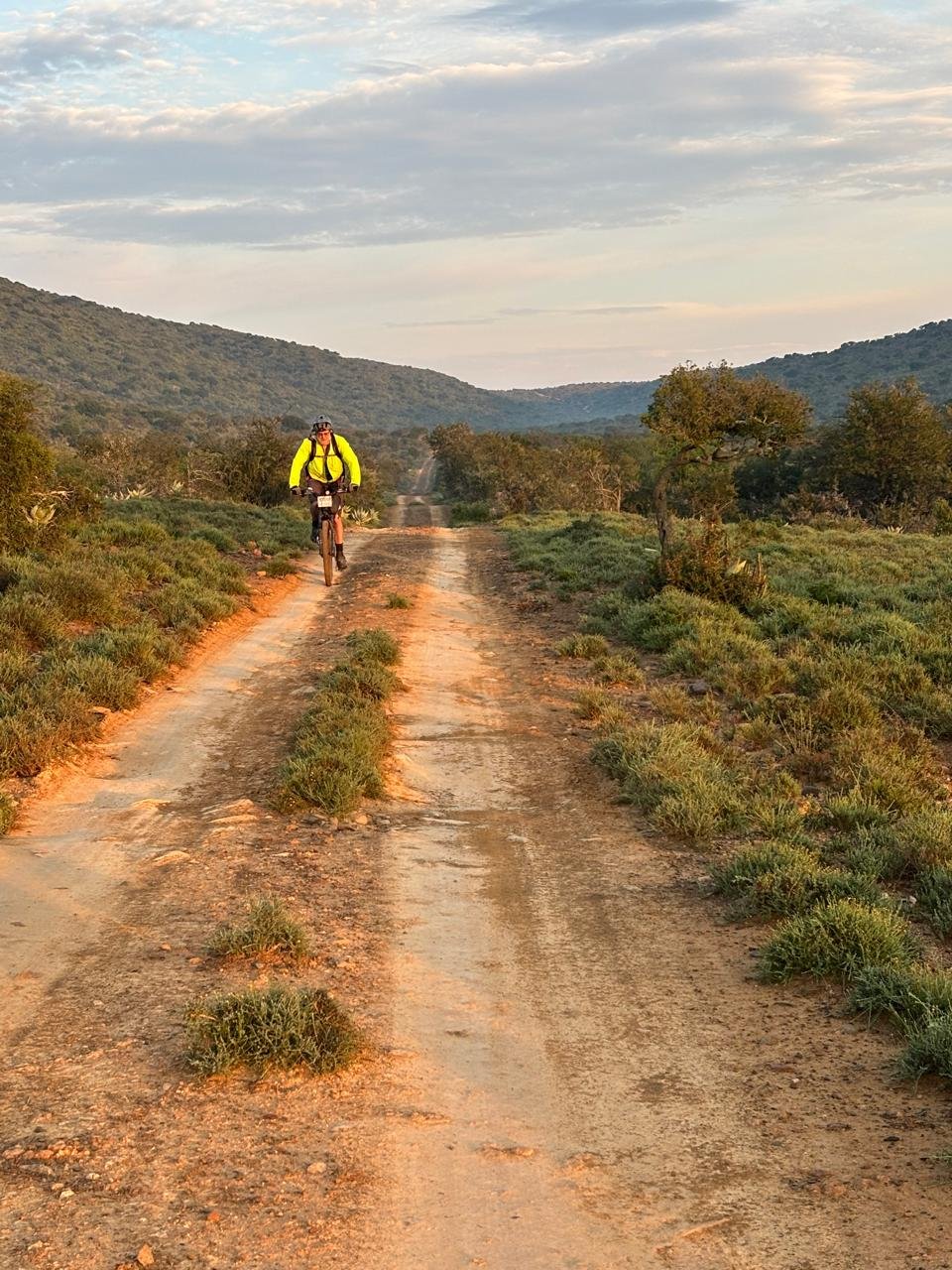
Fifteen days from the Midlands to the sea.
The Great South Easter starts on the doorstep in Nottingham Road and finishes on the lagoon in Knysna. In between are fifteen days of riding along the foot of the southern Drakensberg, over the passes of the Eastern Cape highlands, down through the Karoo foothills and the Zuurberg, and along the coast through the Tsitsikamma.
More than three quarters of it is on gravel roads, farm tracks and jeep track, and none of it is technical. The challenge is the distance and the climbing, day after day. If you ride most weekends, you can do this. You don't need to be fast.
Down the spine of the Eastern Cape.
The route heads south from the Midlands past Himeville and Matatiele, then climbs into the highlands along the Lesotho border. The high point is about 2,585 m, on the way into Rhodes.
From there it drops through the old frontier country, crosses the Zuurberg and reaches the sea at Jeffreys Bay, then follows the coast west through the Tsitsikamma to Knysna.
The first week holds most of the climbing: about 610 km and more than half the total ascent. The second week is lower and longer, with four days of 110 km or more.
Hard days on the bike. Comfortable nights off it.
Nights
A bed every night, in guest farms, small hotels and chalets along the way. Choose a single room, or share a twin or double with a friend or partner.
Your bags go ahead by vehicle each day. You ride with what you need for the day.
Support
Fully supported. Bikes are washed and serviced each evening, meals are taken care of and there is vehicle back-up on the road, so the only job is riding.
E-bikes are welcome. Every overnight stop will have power, so you can charge each night.
Freedom Day falls on Tuesday 27 April, so if you can get to Nottingham Road on the Friday afternoon, the whole ride costs nine days of leave.
The kind of country you'll ride through.
Photos from the Freedom Challenge in 2026, which shares some of this country. Not all of them are on the Great South Easter route.
Comfort hasn't made us happier.
Most of us live with more comfort than any generation before. In The Comfort Crisis, the American journalist Michael Easter argues that it hasn't made us happier. We adjust to each new comfort until it becomes the baseline, and along the way we lose the habit of doing anything difficult.
His answer is discomfort, taken in deliberate doses. This ride is a reasonable dose. With a support vehicle and a bed every night, almost everyone finishes. The discomfort is the honest kind: cold mornings in the highlands, wind, long climbs, sore legs and fifteen days in a row of getting back on the bike.
That is what Unlikely Expeditions is for: hard days, adventure, and coming home having done something well outside your comfort zone.
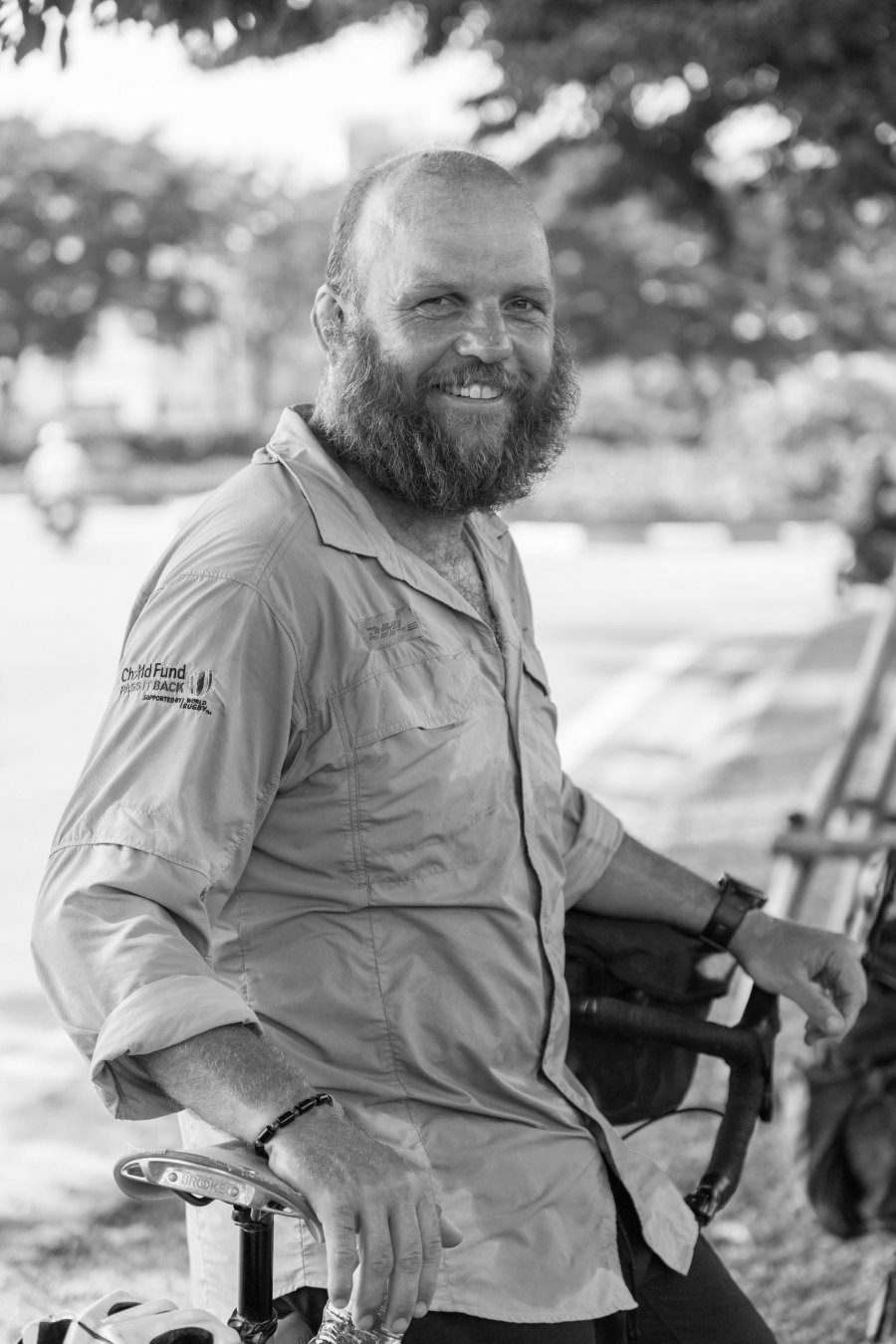
Ron Rutland
I've cycled about 95,000 km through 120 countries on six continents, on three long rides: Cape Town to Brighton through almost every country in Africa, London to Tokyo, and Tokyo to Paris via South America.
None of it needed special talent. It needed a decision to start, and the stubbornness to keep going when stopping made more sense. More about me in the FAQ.
I live in Nottingham Road, where this ride starts. I'll lead it, and at the end of November I'll ride the full route as a recce, meet every host along the way and set up the support.
Unlikely Expeditions runs hard trips for people who don't think of themselves as adventurers. The unlikely one is always you.
Seen enough? Register your interest. It takes two minutes and commits you to nothing.
Register your interestWhat people ask.
Who is Ron Rutland?
I'm a South African adventurer and speaker, based in Nottingham Road in the KZN Midlands. I started out in finance, spending many years in the UK and Asia, then started and ran an events business in Cape Town that hosts the Cape Town Tens every year. Most recently I spent just over two years as Director of the Old Boys' Club at Michaelhouse, before deciding I needed to spend more time outdoors, sharing the best places I've found with other people.
From 2013 to 2015 I spent 27 months cycling some 42,000 km from Cape Town to Brighton, through (almost) every country in Africa, for the 2015 Rugby World Cup. In 2017 came The Longest Hole in Mongolia. In 2019, with a replaced hip, I cycled 20,093 km from London to Tokyo with James Owens, delivered the match whistle for the opening game of the Rugby World Cup, and raised a significant amount for ChildFund Rugby.
In 2022 Adam Nunn and I went back to Tokyo and spent 20 months cycling to Paris, via South America, delivering the whistle for the Women's Rugby World Cup in New Zealand in 2022 and the men's tournament in France in 2023, again for ChildFund Rugby. Those three long rides took me through 120 countries on six continents, about 95,000 km in all.
Before the Africa ride I was a fat former prop with no adventure experience at all, probably the least likely person to attempt it. Twenty-seven months later I knew I was capable of far more than I had assumed, and that most of what I gained came from the hard parts.
Unlikely Expeditions is my attempt at what the Japanese call ikigai: work that combines what I'm good at, what I enjoy and what other people need, and that I can make a living from. For me, that means giving other people the chance to do something hard.
How fit do I need to be?
Fit enough to ride 60 to 115 km on gravel, day after day, with a fair amount of climbing. The riding isn't technical, so fitness counts for more than skill. If you ride most weekends, you're in the right place. A multi-day event or two helps, but isn't required. If you're not sure, ask me.
The first week is the hardest. The legs usually come right by the second.
Can I ride an e-bike?
Yes. E-bikes are welcome, and they make the climbing in the first week a lot friendlier. Power at the overnight stop is one of the conditions I'm choosing accommodation on, so you'll be able to charge every night. I'm also looking into ways to charge mid-day where it's needed and possible. If you're prone to range anxiety, a second battery is worth bringing.
What kind of bike do I need?
A mountain bike is the best choice: hardtail or dual suspension, in good condition, with tyres suited to gravel and rough tracks. A gravel bike with wide tyres will manage, though the rougher farm and jeep tracks will be slower going. Full kit and bike recommendations come with the itinerary.
How much will it cost?
The final price goes to registered riders first, after the recce in November, in the order they registered and before anything goes public. Registering costs nothing and commits you to nothing.
What's included?
The plan is accommodation every night from 16 April to 1 May, meals, vehicle back-up, daily bag transfers, bike washing and servicing, transfers to George or Gqeberha on 2 May, and getting your bike home. The confirmed list comes with the price.
Where do we sleep?
In guest farms, small hotels and chalets, a bed every night. When you register, tell me whether you want a single room or to share a twin or double.
How do I get to Nottingham Road?
Nottingham Road is in the KZN Midlands, under two hours' drive from King Shaka International in Durban. Suggestions for getting there with your bike come with the itinerary.
How do I get home?
On Sunday 2 May we run transfers from Knysna to George and to Gqeberha (PE) for flights home. Tell me which airport suits you when you register. Your bike travels home separately, so you fly without it.
What is the weather like?
Late April is autumn. Days in the highlands are usually clear and mild, but mornings are cold, and around Rhodes frost is likely and an early snowfall is possible. On the coast it's mild, with a chance of rain. Pack for both. A full kit list comes with the itinerary.
Can I register with a friend or partner?
Yes. The form lets you register a second rider at the same time. Each rider takes one of the 16 places.
What happens if more than 16 people register?
Places are offered in the order people registered, and confirmed with a deposit. After 16 riders there is a waiting list, and places that come free go to the waiting list in order.
Do I need insurance?
Yes. Riders arrange their own medical cover, including emergency evacuation. Requirements come with the booking terms.
Have a question that isn't here? WhatsApp or call me on 072 636 3300 and I'll add the answer.